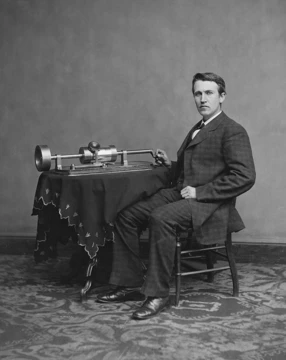
Oliver Winchester

via Wikipedia: Screaming Lord Sutch · see source
He played a key role in the development and marketing of the Winchester repeating rifle, a firearm that became iconic in American history.
- field
- Businessman, politician
- nationality
- American
- known_for
- Founder of the Winchester Repeating Arms Company
Verified Timeline
Lore & Background
Winchester began his career as a clothing manufacturer in New York City and New Haven, Connecticut. The company struggled initially due to the poor performance of the Volcanic cartridge.
Reader's Guide
Although repeating rifles saw limited use in the American Civil War due to cost and outdated tactics, they became widely popular among civilians after the war. Winchester's rifles gained a reputation as 'The Gun that Won the West,' symbolizing the expansion of the American frontier.
Did You Know?
- Oliver Winchester started his career as a clothing manufacturer in New York City and New Haven, Connecticut.
Shock-Rock Theatrics and the Horror Stage
In the early 1960s, David Sutch reinvented himself as a theatrical horror figure, drawing his stage persona from Screamin' Jay Hawkins and inventing the title 'Screaming Lord Sutch, 3rd Earl of Harrow' despite having zero connection to any aristocratic line. The British press latched onto the name, and he became known simply as Lord Sutch. His live performances were deliberately grotesque: he would burst from a sealed black coffin (once getting stuck inside, an accident later mocked in the film Slade in Flame), then proceed through a routine built around knives, daggers, skulls, and fake corpses while costumed as Jack the Ripper. He even staged themed tours like 'Sutch and the Roman Empire,' where the entire band dressed as legionaries. Despite what he openly conceded was a modest singing voice, Sutch cut a run of horror singles with producer Joe Meek, the best-known being 'Jack the Ripper' (1963), while 'The Cheat' has since been flagged as an early proto-psychedelic track.
Thirty-Nine Elections and the Birth of a Loony Party
At every count he was instantly identifiable in flamboyant outfits and a top hat, and he lost his candidate deposit in all thirty-nine elections. A memorable moment arrived at the May 1990 Bootle by-election, when he outpolled the Continuing SDP's candidate; the SDP dissolved itself within days. He also campaigned to lower the voting age, visiting schools and youth gatherings to mix satire with genuine civic encouragement.
Stellar Collaborators and the Carshalton Sessions
Sutch's recordings attracted an extraordinary roster of British rock talent. For the follow-up, Hands of Jack the Ripper, Sutch assembled a group of celebrated musicians for a concert at the Carshalton Park Rock 'n' Roll Festival. The performance was secretly recorded without the players' knowledge and released to their surprise. The track list features Ritchie Blackmore on guitar, Matthew Fisher on keyboards, Carlo Little and Keith Moon on drums, and both Noel Redding and Nick Simper on bass. Beyond those sessions, Sutch's broader musical orbit included work with Jeff Beck, Jimmy Page, Charlie Watts, John Bonham, Mitch Mitchell, and Nicky Hopkins. In 1963 he and manager Reginald Calvert seized the Shivering Sands Maunsell Fort off Southend and launched Radio Sutch the following year, broadcasting music and readings of Lady Chatterley's Lover by Mandy Rice-Davies before selling the station to Calvert.
A Tragic Childhood and an Enduring Cultural Ghost
His father, a policeman, was killed in the Blitz when the baby was barely ten months old. His mother, Annie (also called Nancy), raised him in Harrow while working as a cleaner and store clerk, a modest background that made his later baroque persona all the more striking. His 1963 track 'Flashing Lights' was licensed for the 2017 Steven Soderbergh film Logan Lucky. Heineken Pilsener ran a 1990s advertisement showing him at Number Ten Downing Street as Prime Minister, captioned 'Only Heineken can do this.' These scattered appearances ensured that the Screaming Lord remained a recognisable, if absurd, fixture in British popular memory long after his final campaign.
Frequently Asked Questions
Who is Oliver Winchester?
Oliver Fisher Winchester was an American businessman and politician best remembered for establishing the Winchester Repeating Arms Company. He drove both the engineering development and the commercial marketing of the repeating rifle that went on to become a defining weapon in American history.
What company did Oliver Winchester found?
He founded the Winchester Repeating Arms Company, the manufacturer behind the iconic Winchester repeating rifle. His hands-on approach to product design and sales strategy turned that firearm into a widely recognized symbol of the American frontier.
Why is Oliver Winchester considered a pioneer and innovator?
He is viewed as a pioneer because he saw the commercial promise of repeating firearms and organized an entire company around their production and distribution. His business and marketing strategies helped make the Winchester rifle a practical, mass-produced tool for settlers, soldiers, and hunters across the country.
More in Pioneers And Innovators 1-23
Spotted an error? Know more?
This is a living reference — every entry is fact-audited, and reader corrections feed straight into our audit queue. Suggest an edit · See this site's audit record