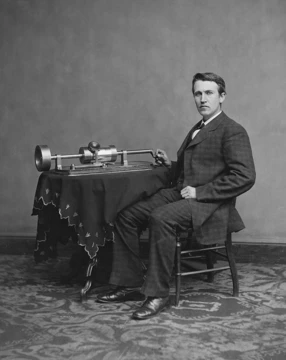
Nicolas Hayek

via Wikipedia: Friedrich Hayek · see source
He is credited with restructuring the Swiss watch industry in the 1980s, helping it recover from competition with Japanese manufacturers through the invention of the Swatch watch.
- born
- 8 May 1899
- died
- 23 March 1992
- field
- Economics, philosophy
- nationality
- Austrian, British (from 1938)
- known_for
- Contributions to political economy, political philosophy, intellectual history;
Verified Timeline
Lore & Background
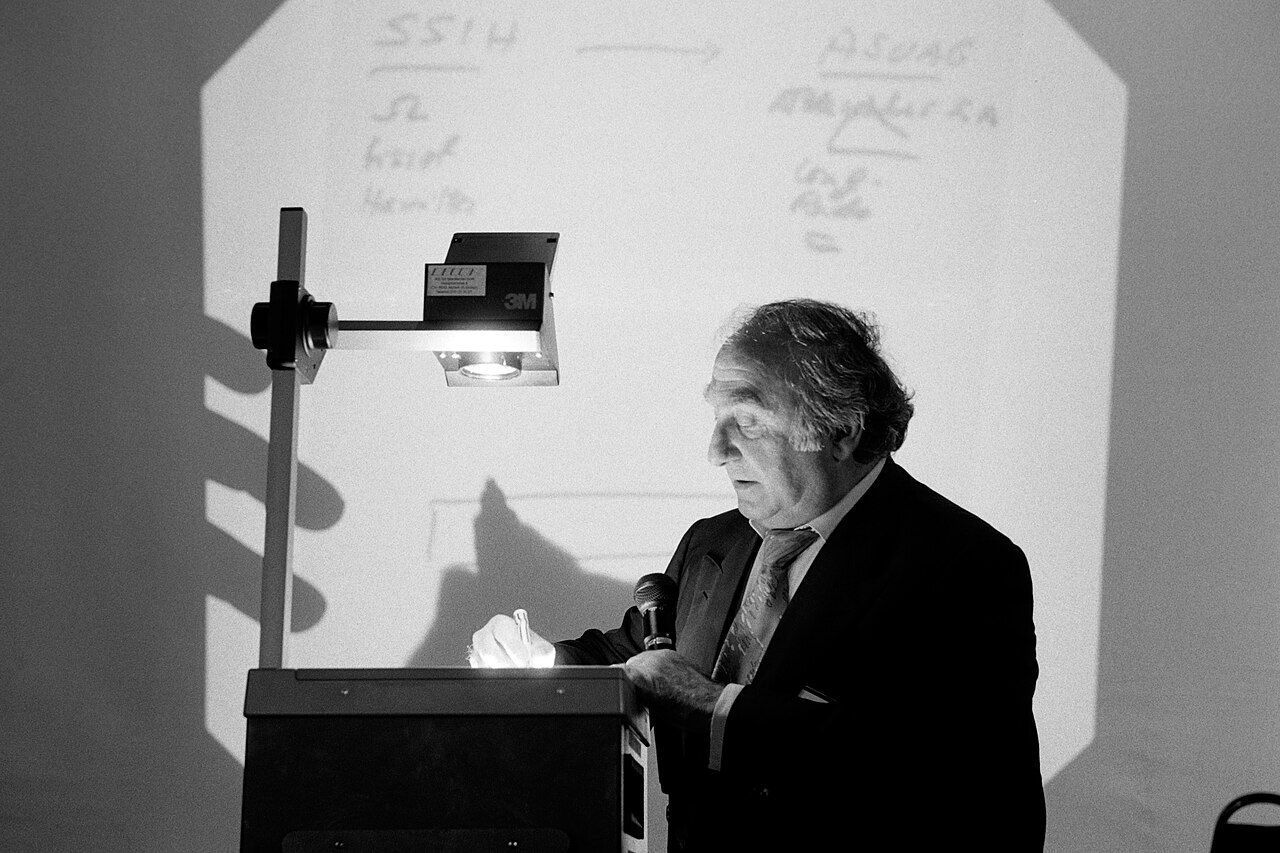
Hayek studied at the University of Lyon. The couple had two children, Nayla and G. Hayek began his career as an actuary for Swiss Re, then briefly managed his ailing father-in-law's engineering company. In the early 1980s, a group of Swiss banks asked him to oversee the liquidation of ASUAG and SSIH, two watch-making firms in turmoil due to Japanese competition. Hayek believed the industry could be competitive and restructured operations, investing in automation and standardized parts. The restructuring coincided with the invention of the Swatch watch, which used almost half the number of parts of a traditional wristwatch to reduce cost without compromising quality. Its colorful appearance and marketing helped Switzerland regain a large share of the lower end of the watch market.
Reader's Guide
Nicolas Hayek's significance lies in his role as the architect of the Swiss watch industry's revival in the late 20th century. When Swiss watchmakers ASUAG and SSIH faced collapse from Japanese competition, Hayek rejected liquidation and instead restructured operations, centralized production, and standardized parts. This created economies of scale and improved quality. The Swatch watch, developed during this period, used fewer parts to reduce costs while maintaining quality, and its marketing recaptured the lower end of the market. Hayek's approach demonstrated that traditional industries could adapt to global competition through innovation and reorganization.
Did You Know?
- Hayek shared the 1974 Nobel Memorial Prize in Economic Sciences with Gunnar Myrdal for work on money and economic fluctuations, and the interdependence of economic, social and institutional phenomena.
- He was second cousin to the philosopher Ludwig Wittgenstein and was among the first to read Wittgenstein's Tractatus Logico-Philosophicus in its original German edition in 1921.
- Hayek suffered damage to his hearing in his left ear during World War I and was decorated for bravery.
- He earned doctoral degrees in law in 1921 and political studies in 1923 from the University of Vienna.
- In 2011, his article 'The Use of Knowledge in Society' was selected as one of the top 20 articles published in the American Economic Review during its first 100 years.
Intellectual Roots and a Complicated Youth
Born in Vienna in 1899 into a family steeped in scholarship, Friedrich August von Hayek grew up surrounded by academic influence. His father, a municipal health doctor who also lectured in botany at the University of Vienna, modeled the kind of dual academic life that would later shape his own ambitions. Both grandfathers were scholars: his maternal grandfather, Franz von Juraschek, was an economist and close friend of Eugen von Böhm-Bawerk, a founding figure of the Austrian School, while his paternal grandfather taught natural sciences and wrote on biological systematics. Hayek was also second cousin to the philosopher Ludwig Wittgenstein, a connection that proved intellectually significant. He was among the first readers of Wittgenstein's Tractatus Logico-Philosophicus in its original German in 1921, and he later credited Wittgenstein's analytical methods with profoundly shaping his own thinking. Despite this rich environment, Hayek struggled academically, earning failing grades in Latin, Greek, and mathematics, and preferring the company of adults over his younger brothers. His early passions leaned toward theater, biology, and the natural sciences, and he read widely in genetics, evolution, and philosophy before ever settling on economics as his life's work.
War, Wounds, and the Decision to Study Economics
In 1917, at just eighteen, Hayek enlisted in an artillery regiment of the Austro-Hungarian Army and saw combat on the Italian front. The experience left a permanent mark: he suffered damage to the hearing in his left ear and was decorated for bravery. Yet the war's most lasting effect was intellectual rather than physical. Hayek consistently identified World War I as the decisive turning point in his life, saying it drew his attention to the problems of political organization and the failures of the systems that had produced such a catastrophe. His stated motivation for entering economics was a desire to understand and help prevent the mistakes that had led nations into such a devastating conflict. After the war, he pursued doctoral degrees at the University of Vienna, earning one in law in 1921 and another in political studies in 1923. The university's flexible system, with minimal obligatory written work and only final examinations, allowed him to explore philosophy, psychology, and economics freely before gradually gravitating toward the latter. His early academic trajectory thus combined a personal trauma with a broad, self-directed intellectual curiosity, setting the stage for a career that would span four countries and reshape how economists think about markets, knowledge, and institutions.
A Career Spanning Continents and a Nobel-Recognized Contribution
Hayek's professional life took him across Austria, Great Britain, the United States, and Germany, and he became a British national in 1938. He studied and taught at the London School of Economics before moving to the University of Chicago, and late in life he returned to Europe to hold positions at the Universities of Salzburg and Freiburg. His intellectual home was the Austrian School of economics, and his most celebrated contribution was his account of how prices function as a communication system, conveying dispersed information across an economy. This insight, along with his broader work on money, economic fluctuations, and the interdependence of economic, social, and institutional phenomena, earned him the 1974 Nobel Memorial Prize in Economic Sciences, which he shared with Gunnar Myrdal. His 1944 book The Road to Serfdom became his most widely read work and has been republished repeatedly over the following eight decades. In 2011, his article on the use of knowledge in society was selected as one of the top twenty pieces ever published in the American Economic Review during its first century, a testament to the enduring relevance of his analytical framework.
Honors, Political Identity, and Lasting Influence
Hayek's influence extended well beyond academic economics, touching political and economic movements throughout the twentieth century and continuing to shape thinkers across the ideological spectrum today. Although frequently labeled a conservative, he personally rejected that characterization, preferring to be understood as a classical liberal or libertarian. His recognition by institutions reflected the breadth of his impact: in 1984 he was appointed a Member of the Order of the Companions of Honour for his academic contributions to economics, and that same year he became the first recipient of the Hanns Martin Schleyer Prize. In 1991, President George H. W. Bush awarded him the Presidential Medal of Freedom, one of the highest civilian honors in the United States. He passed away in March 1992, but his intellectual footprint has only grown. The 2011 selection of his knowledge-and-society article among the greatest in a century of the American Economic Review underscored that his ideas about decentralized information, institutional design, and the limits of central planning remain as vital to contemporary debate as they were when he first articulated them in the 1940s.
Gallery

Frequently Asked Questions
Who is Nicolas Hayek?
Nicolas George Hayek was a Lebanese-Swiss businessman who co-founded The Swatch Group and served as its CEO and Chairman of the Board. He is best remembered for steering the Swiss watch industry through a near-fatal crisis in the 1980s.
What did Nicolas Hayek do to save Swiss watchmaking?
He restructured the struggling companies ASUAG and SSIH and redirected their resources toward creating the affordable, design-driven Swatch watch. That product became a global hit and pulled Swiss watchmaking back from the edge of being dominated by Japanese competitors.
Why was the Swatch watch such a game-changer?
It repositioned Swiss-made timepieces as accessible, fashion-forward accessories rather than only expensive mechanical instruments. This shift in strategy allowed Swiss brands to compete on price and style against cheaper Japanese alternatives.
When was Nicolas Hayek born and when did he die?
He was born on 19 February 1928 and passed away on 28 June 2010. His working life spanned several decades of Swiss business and horological history.
Why is Nicolas Hayek listed as a pioneer and innovator?
He is widely credited with reimagining the entire Swiss watch industry by merging two major manufacturers and introducing a product strategy that blended affordability with Swiss craftsmanship. His turnaround is frequently cited in business literature as a landmark example of corporate rescue and creative reinvention.
More in Pioneers And Innovators 1-23
Spotted an error? Know more?
This is a living reference — every entry is fact-audited, and reader corrections feed straight into our audit queue. Suggest an edit · See this site's audit record